Currently Empty: ₹0.00

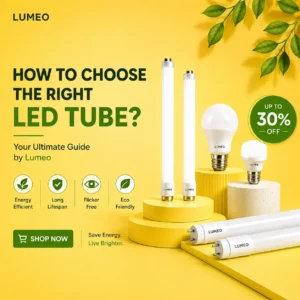
LED tube lighting is an essential one for every place—home, office, and everywhere in between. Whether you are upgrading a busy workspace or brightening a kitchen, these versatile lights have become the modern standard for illumination. However, simply picking the first tube you see can lead to poor performance or installation headaches. Choosing the right tube matters because it impacts your energy bills, the quality of your environment, and even your long-term maintenance costs.
This guide will walk you through everything you need to know to make an expert choice for your next lighting project.
Understanding the Types of LED Tubes
Before you buy, you must understand the different “families” of LED tubes available. They are generally categorized by their physical size and their internal wiring.
The “T” Sizes: T5, T8, and T12
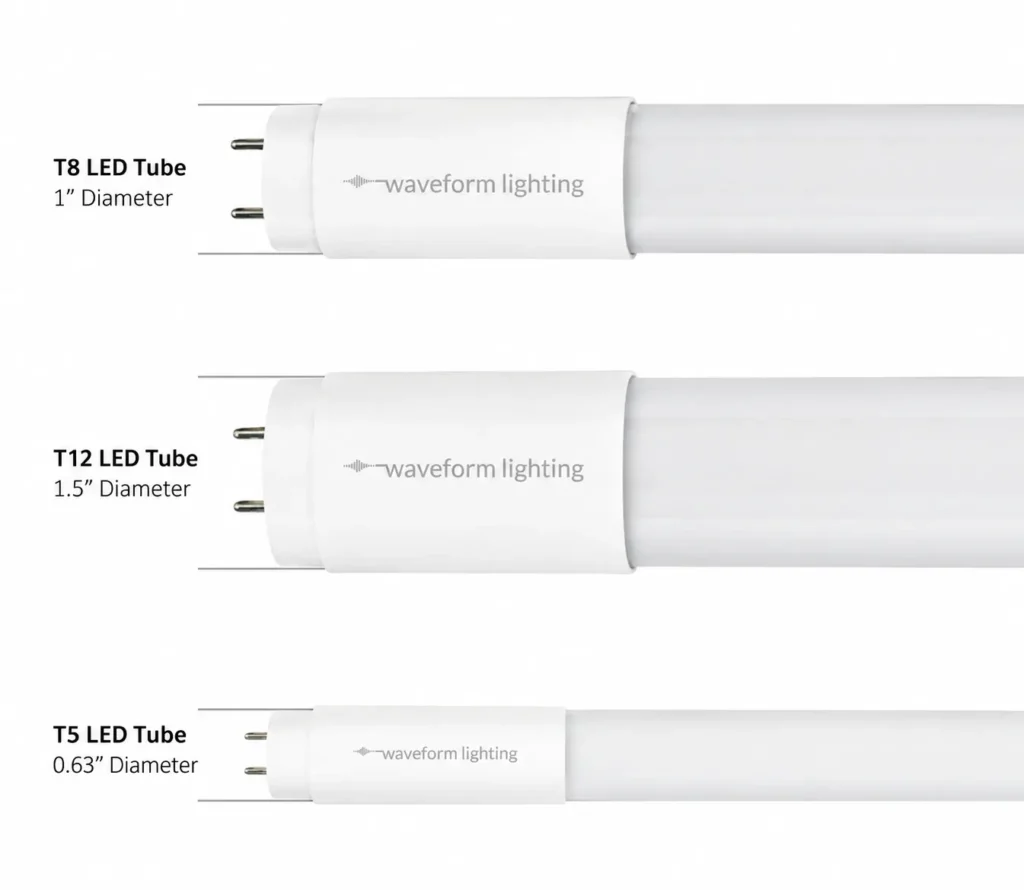
The “T” in tube names stands for tubular, and the number represents the diameter in eighths of an inch.
T5 LED Tubes
These are the thinnest and most modern tubes, measuring 5/8 of an inch. They are renowned for their high efficiency and superior light quality, making them perfect for compact spaces where maximum brightness is needed.
T8 LED Tubes
Measuring 1 inch in diameter, T8s are the most common tubes on the market today. They offer a great balance of affordability and versatility, providing broad illumination for various settings.
T12 LED Tubes
These are the oldest and largest tubes, at 1.5 inches in diameter. While mostly obsolete, many older fixtures still use them, and they are typically replaced by more efficient T8 LEDs.
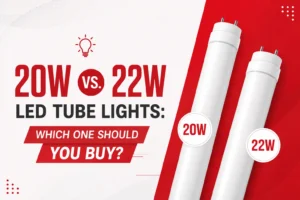
Read about Why a 20W LED Tube Light is the Perfect Replacement for Traditional Fluorescent Tubes.
Installation Types (The ABCs)
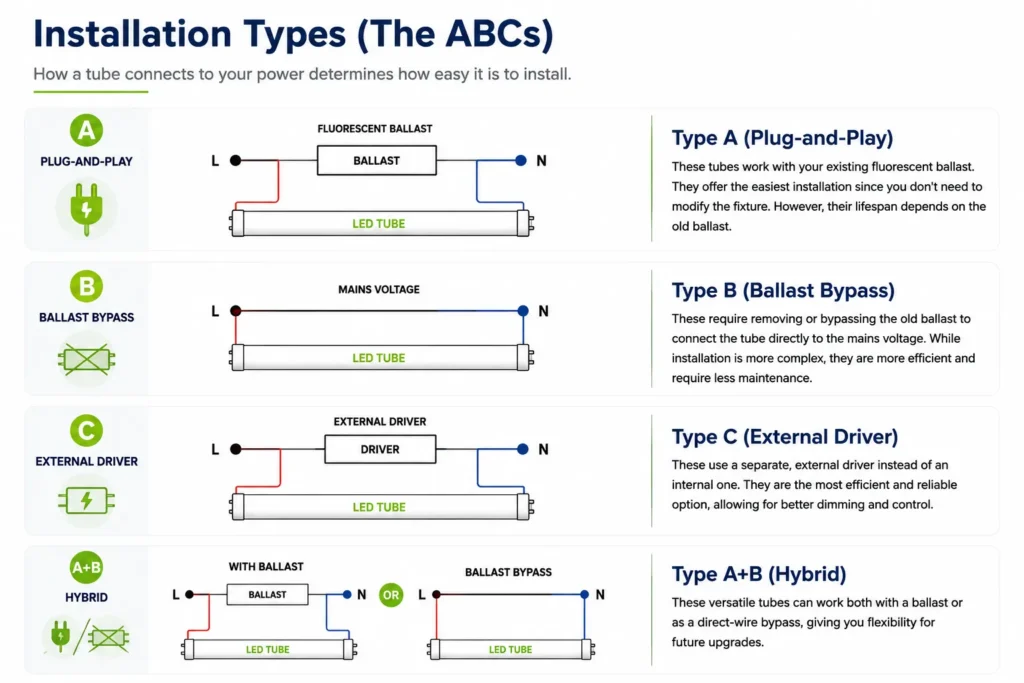
How a tube connects to your power determines how easy it is to install.
Type A (Plug-and-Play)
These tubes work with your existing fluorescent ballast. They offer the easiest installation since you don’t need to modify the fixture. However, their lifespan is limited by the health of that old ballast.
Type B (Ballast Bypass)
These require removing or bypassing the old ballast to connect the tube directly to the mains voltage. While installation is more complex, they are more efficient and eliminate future ballast maintenance.
Type C (External Driver)
These use a separate, external driver instead of an internal one. They are the most efficient and reliable option, allowing for better dimming and control.
Type A+B (Hybrid)
These versatile tubes can work both with a ballast or as a direct-wire bypass, giving you flexibility for future upgrades.
Where to Use Them: Usable Locations
The right LED tube can transform the “vibe” of any space.
Offices
Modern office lighting is a key to enhancing productivity. T5 and T8 tubes provide the clean, glare-free light needed for focus.
Homes
For kitchens, garages, and basements, LED tubes offer a robust 10-year lifespan that outperforms traditional options.
Industrial and Retail
Warehouses and shops benefit from the high brightness and lower power consumption of long-lasting LED battens.
Why Brightness and Light Quality Matter
When choosing LEDs, forget everything you knew about watts. In the LED world, how brightness matters is measured in lumens.
Lumens vs. Watts
Watts measure power used, but lumens measure light produced. Always look for high lumens per watt to ensure you are getting the most light for your money.
Color Temperature (CCT)
Warm shades (3000K) are great for a cozy mood, while cool daylight (5000K-6000K) is better for tasks and office work.
Color Rendering Index (CRI)
This measures how accurately the light shows colors. For workspaces, a CRI above 80 is essential to ensure a natural and attractive look.
Critical “Things to Take Care Of”
To avoid a “shocking situation,” keep these technical details in mind.
Ballast Compatibility
If you choose Type A, always check the manufacturer’s compatibility sheet to ensure it works with your specific ballast.
Socket Type
Most LED tubes require non-shunted sockets (tombstones). If your current fixture has shunted sockets, you may need to replace them.
Certifications
Look for UL Classified or DLC Certified labels. These ensure the product has been tested for safety and efficiency.
Beam Angle
Unlike old tubes that shine in 360 degrees, some LEDs are directional. Ensure the beam angle fits your fixture to avoid dark spots on the walls.
The Best Other Things to Consider
Switching to LEDs isn’t just about light—it’s about a cleaner future.
The Mercury Factor
Traditional fluorescent tubes contain toxic mercury that can be released if they break. LEDs are mercury-free, making them much safer for homes and schools.
Energy Saving Myth
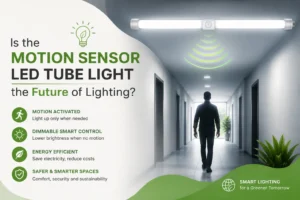
Some claim 40% savings just by swapping tubes, but the math is complex. True savings come from bypassing the ballast or using smart sensors that dim the lights when no one is around.
Heat Reduction
Unlike traditional tubes that get hot, LEDs produce very little heat, which helps them stay efficient and last longer.
Proper Disposal
Always dispose of your old fluorescent tubes at a proper recycling site due to their mercury content.
Final Thoughts
Choosing the right LED tube from Lumeo means better light, lower costs, and a safer environment. Take your time to match the tube type to your fixture, and you will enjoy brilliant, flicker-free light for years to come.